
How to Choose Your First Grill: A Complete Beginner's Guide
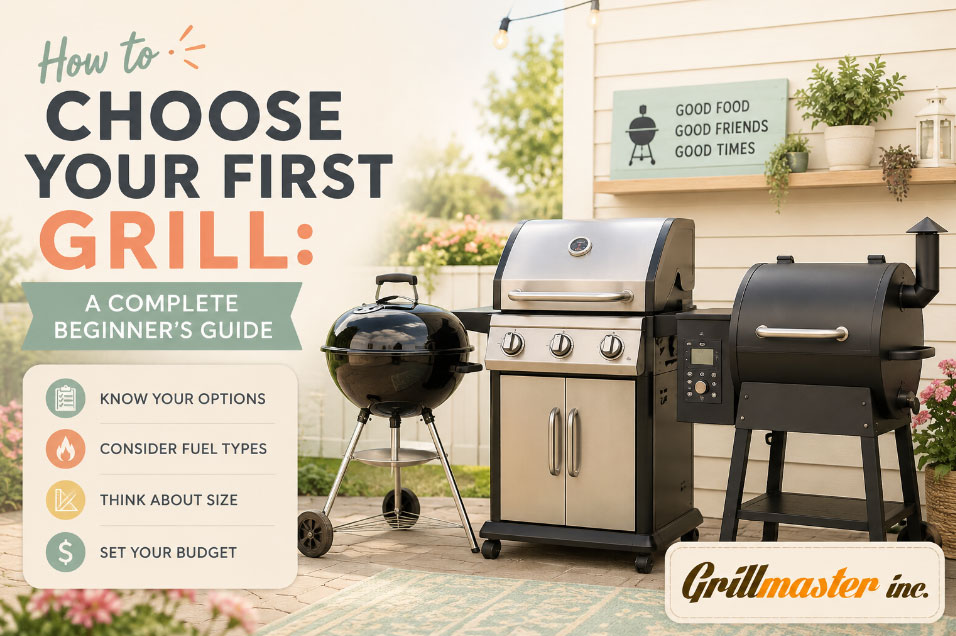
There's a particular kind of paralysis that hits the moment you decide to buy your first grill. You walk into a hardware store, or worse, you open a shopping app, and suddenly you're staring at forty different machines that all claim to be "the one." Some cost eighty dollars. Some cost eight thousand. Some run on charcoal, some on propane, some on wood pellets fed by a tiny robotic auger. None of them come with an obvious answer to the only question that matters: which one is actually right for you?
This guide exists to answer that question honestly, without steering you toward whatever happens to be on sale this week. By the end, you'll understand the real differences between grill types, what features are worth your money and which ones are marketing noise, how much you should realistically expect to spend, and where to go for trustworthy, ongoing advice once you own the thing.
Why Your First Grill Decision Matters More Than You Think
A grill is not a small purchase, and it's not a purchase you make often. Most people buy a grill once and keep it for five, eight, sometimes fifteen years. Get it right, and you end up with a piece of equipment that quietly becomes part of your weekly routine — something you reach for on a Tuesday because it's easier than turning on the oven, not just something you drag out for the Fourth of July.
Get it wrong, and you end up with one of two common outcomes. Either you buy something too complicated for how you actually cook, and it sits in the corner of the patio collecting rust and regret, or you buy something too limited, and within a year you're already saving up to replace it. Both outcomes cost more money in the long run than doing the research up front.
The good news is that choosing well doesn't require becoming a barbecue obsessive overnight. It requires answering a handful of practical questions about how you live, how you cook, and how much friction you're willing to tolerate in exchange for flavor. That's the real framework underneath everything else in this guide.
Step 1: Choose Your Fuel Type First
Every other decision — size, price, features — sits downstream of one core choice: what will your grill burn? This is the single most consequential decision you'll make, because it determines your flavor, your learning curve, your cleanup routine, and your monthly grocery list of propane tanks, charcoal bags, or hardwood pellets.
Charcoal Grills: The Purist's Choice
Charcoal is where grilling started, and it still produces a flavor that gas simply can't replicate — that deep, slightly smoky char that comes from live fire and rendered fat hitting hot coals. Charcoal grills, especially kettle-style models, are also refreshingly simple mechanically. There's no ignition system to fail, no propane regulator to troubleshoot, nothing electronic that can break.
The tradeoff is time and attention. Lighting charcoal takes ten to twenty minutes before you're ready to cook, and managing temperature means opening and closing vents rather than turning a dial. For a lot of beginners, this learning curve is actually part of the appeal — there's something satisfying about mastering fire. For others, it's a dealbreaker on a Tuesday night when dinner needs to happen in thirty minutes total.
Charcoal is the right starting point if you value flavor above convenience, you're not in a rush most nights, and you don't mind a bit of a learning curve in exchange for the most traditional grilling experience available.
Gas Grills: Convenience Wins
Gas grills, running on either propane tanks or a natural gas line, are the most popular category in the United States for a simple reason: they work almost instantly. Turn the knob, hit the igniter, and you're cooking in under ten minutes with precise, adjustable heat across multiple burners.
This precision is genuinely valuable for beginners. You can create distinct heat zones — high heat for searing, low heat for slower cooking — without the guesswork that charcoal requires. Cleanup is also simpler, since there's no ash to deal with, just occasional grease tray maintenance.
What you give up is some of that live-fire flavor, though modern gas grills with flavorizer bars or lava rocks close the gap more than people expect. Gas is the right choice if you want to grill on a random Wednesday without ceremony, you're cooking for a family on a schedule, or you simply want the lowest-friction path to consistently good food.
Pellet Grills: Set-and-Forget Smoking
Pellet grills are the newest major category, and they've earned a devoted following fast. They burn compressed hardwood pellets fed automatically by an auger, with an electronic controller maintaining a set temperature — meaning you can genuinely walk away for hours while a brisket or a rack of ribs cooks low and slow.
For beginners specifically interested in smoking meat rather than quick high-heat grilling, a pellet grill is arguably the most forgiving entry point available. The electronics do the temperature management that used to require years of experience with a traditional offset smoker.
The tradeoffs: pellet grills need electricity to run, they're generally not built for the screaming-hot sears that a good steak wants, and pellets themselves are an ongoing cost. They're also mechanically more complex, meaning more that can eventually need repair. Choose a pellet grill if smoking is your real goal and you're comfortable trading some searing performance and simplicity for hands-off convenience.
Kamado Grills: The All-Rounder
Kamado-style grills — thick-walled ceramic cookers descended from Japanese and Chinese clay ovens — do something few other grills can: they handle low-and-slow smoking, high-heat searing, and even baking, all in one vessel. The ceramic body holds heat with remarkable efficiency, which also means they use less charcoal than a standard kettle over a long cook.
They're versatile, durable, and genuinely excellent once you learn their quirks. They're also heavy, expensive relative to a basic kettle or gas grill, and a poor fit if you're tight on patio space or budget. A kamado is worth considering if you want one grill to do everything and you're willing to pay a premium for that flexibility.
Electric Grills: The Apartment Solution
If open flame isn't an option — many apartment buildings and condos prohibit gas and charcoal grills on balconies for fire-safety reasons — an electric grill is the practical answer. Plug it in, and a heating element does the work. You won't get true smoky flavor, but you'll get real grill marks, a hot cooking surface, and a legal way to grill where other fuel types aren't allowed.
Electric is the right pick if local rules constrain your options, or if you simply want the absolute lowest-maintenance experience and don't prioritize smoke flavor.
Step 2: Match the Grill to Your Space
Once you've settled on a fuel type, space becomes the next filter. Measure your patio, balcony, or backyard area before you shop, not after. A grill needs clearance on all sides — most manufacturers recommend at least three feet from any structure, railing, or overhang, both for safety and so you can actually move around it while cooking.
Think honestly about how you'll store it too. If your grill lives outside year-round, look for a weather-resistant build and consider a cover as a non-negotiable accessory. If it needs to be moved into a garage or shed between uses, weight and wheel quality matter more than they might seem to at first glance — a forty-pound kettle grill on sturdy casters is a very different daily experience than an awkward, heavy cart-style gas grill without decent wheels.
Step 3: Set a Budget That Makes Sense
Grill prices span an enormous range, and more expensive doesn't automatically mean better for a beginner. Here's roughly how the market breaks down:
Entry level (under $200): This tier covers solid charcoal kettles and basic electric grills. A well-known charcoal kettle in this range will genuinely last a decade with basic care and is, honestly, still what many professional chefs recommend for people learning to grill.
Mid-range ($200–$600): This is where most gas grills for small-to-medium households live, along with entry-level pellet grills and smaller kamado units. You'll get multiple burners, better build materials, and more consistent temperature control.
Upper mid-range ($600–$1,500): Larger gas grills with better stainless components, mid-size kamados, and full-featured pellet smokers sit here. This is a reasonable ceiling for most serious beginners who know grilling will become a regular hobby.
Premium ($1,500+): Large kamados, built-in outdoor kitchen units, and high-end pellet smokers with app connectivity and precise probes live in this range. Unless you already know exactly what you want and why, this tier is rarely the right starting point for a first grill.
A practical rule: as a first-time buyer, spend enough to get a grill with even heat and decent build quality, but resist the pull toward top-tier models until you know your own habits. Plenty of experienced grillers still cook happily on equipment that costs a few hundred dollars.
Step 4: Features Worth Paying For
Grill marketing loves to pile on features, and not all of them earn their price tag. Here's what's actually worth prioritizing.
Build Quality and Materials
Look for heavier-gauge steel, porcelain-enameled or stainless-steel cooking grates, and solid welds rather than thin sheet metal held together with a lot of screws. You can often tell the difference just by knocking on the lid — a hollow, tinny sound usually signals a grill that won't hold heat well or survive many seasons outdoors.
Cooking Surface Area
Bigger isn't automatically better, but undersized is a real problem. Think about how many people you typically cook for, then add a buffer, since grills rarely use their full stated surface efficiently — some space is always lost to burner covers or indirect zones. As a rough guide, 300–500 square inches of cooking area comfortably serves a family of four with room for guests.
Temperature Control
For gas grills, this means the number and independence of burners — two burners give you a basic hot zone and cool zone, three or more give you real flexibility. For charcoal, it means quality, adjustable vents. For pellet grills, it means a reliable digital controller, ideally one with a companion app if you want remote monitoring.
Portability
If you'll ever tailgate, camp, or move the grill between a deck and a storage spot, wheel quality and overall weight matter enormously. A grill that's a struggle to move ends up staying wherever it was first assembled, which sometimes isn't where you actually want to cook.
Extras That Are Genuinely Useful
A built-in thermometer, a side shelf for prep space, and a warming rack are all modest additions that meaningfully improve everyday use. Rotisserie kits, searing side burners, and smoker boxes are nice but should be considered bonuses, not deciding factors, for a first grill.
Step 5: Do Your Homework Before You Buy
Reviews and buying guides genuinely help here, especially ones that test grills over time rather than just out of the box. A few resources consistently deliver trustworthy, detailed information for beginners:
- Consumer Reports runs independent lab testing on grills across every price tier and fuel type, which is useful if you want data-driven comparisons rather than marketing copy.
- AmazingRibs.com is one of the most respected independent grilling and barbecue resources online, with deeply researched equipment reviews and beginner-friendly technique guides.
- Serious Eats publishes detailed, tested grilling guides that are especially good for understanding technique alongside equipment.
- America's Test Kitchen applies its rigorous testing methodology to grills the same way it does to kitchen appliances, which is helpful for comparing build quality claims against real-world performance.
- Weber, Traeger, Char-Broil, Napoleon, and Kamado Joe are established manufacturers whose own sites offer detailed spec sheets and comparison tools worth cross-referencing against independent reviews.
- ThermoWorks isn't a grill retailer, but its guides on grill and meat thermometers are excellent once you're ready to think about accessories.
Read a few reviews from each type of source — a lab-tested comparison, an enthusiast site, and the manufacturer's own materials — before settling on a model. Patterns that show up across all three are far more trustworthy than a single glowing review.
Common Mistakes First-Time Buyers Make
Buying too small. It's tempting to save money with a compact grill, but running out of cooking surface mid-cookout is one of the most common regrets new owners report. Buy for the gatherings you actually host, not just weeknight dinners for two.
Ignoring assembly difficulty. Some grills arrive nearly built; others require hours with a wrench and a lot of small hardware. If you're not confident with assembly, check reviews specifically for notes on how difficult setup is, or budget for professional assembly if it's offered.
Chasing features you won't use. Side burners, rotisserie attachments, and smart app controls all sound appealing in a showroom. Before paying extra for them, honestly ask whether you'll use a feature more than a couple of times a year.
Underestimating fuel costs. Propane tanks, charcoal bags, and hardwood pellets all cost money over time, and pellet grills in particular can be more expensive to run regularly than people expect. Factor ongoing fuel costs into your total cost of ownership, not just the sticker price.
Skipping the cover. A grill left uncovered outdoors ages fast — rust, faded finishes, and weather-worn components are largely preventable with an inexpensive, well-fitted cover.
Keeping Your Grill Alive: Basic Maintenance
A grill is a mechanical, weather-exposed object, and a little routine care goes a long way toward avoiding an early replacement.
After every cook, brush down the grates while they're still warm — food residue comes off far more easily hot than cold. Every few uses, empty ash from charcoal grills or clean the grease trap on gas and pellet models; built-up grease is both a flavor problem and a fire risk. Seasonally, do a deeper clean: remove and scrub grates, wipe down interior surfaces, and check gas lines and connections for wear if you own a propane grill. Before storage or during off-seasons, a full cover and, for gas grills, disconnecting the tank, keeps components from degrading over winter months.
None of this needs to be elaborate. Fifteen minutes of basic upkeep after each use, plus one thorough seasonal cleaning, is enough to keep most grills performing well for years.
Safety First
A few safety basics are worth internalizing from day one, regardless of fuel type. Keep at least three feet of clearance from your house, railings, and anything flammable. Never use a charcoal or gas grill inside a garage, enclosed porch, or any indoor space — carbon monoxide buildup is a serious risk. Check gas connections for leaks periodically using a simple soapy water test; bubbling at a fitting means a leak that needs attention before you cook again. Keep a basic fire extinguisher rated for grease fires nearby, and never leave a lit grill unattended, especially around kids or pets.
Frequently Asked Questions
What's the best grill for a total beginner?
For most first-time buyers, a mid-size charcoal kettle or a two-to-three-burner gas grill offers the best balance of low cost, forgiving operation, and genuinely good results. Both let you learn fundamental grilling skills without a steep technical learning curve.
Is charcoal or gas better for beginners?
Neither is objectively better — it depends on what you value. Gas is faster and easier to control precisely; charcoal delivers more traditional flavor and teaches you more about fire management. Many experienced grillers eventually own both.
How much should I spend on my first grill?
A capable first grill typically falls between $150 and $600, depending on fuel type and size. Spending more than that is rarely necessary until you know your own habits and preferences well.
Do I need a pellet grill to smoke meat?
No. Charcoal grills and kamados can both smoke effectively with the right setup, using indirect heat and wood chips or chunks. A pellet grill simply automates much of that process, which is convenient but not required.
How long should a good grill last?
A well-maintained charcoal kettle or quality gas grill can easily last eight to fifteen years. Pellet grills, due to their electronic components, often have a somewhat shorter realistic lifespan, typically five to ten years with regular use and care.
Final Thoughts: Matching the Grill to the Griller
There's no universally correct first grill, only the right one for how you actually plan to cook. If you want speed and simplicity on a weeknight, gas will serve you well. If you're drawn to the ritual and flavor of live fire, a charcoal kettle is hard to beat for the price. If smoked barbecue is the real goal, a pellet grill or a kamado will get you there with less trial and error than you might expect.
The honest advice, after all the specifications and comparisons, is this: buy something solidly built, sized appropriately for how you actually cook and how many people you actually feed, and priced within a range that lets you learn without financial regret if your preferences shift. Everything else — the smoker rings, the app connectivity, the rotisserie kits — can come later, once you know what kind of griller you actually are.
That knowledge, more than any spec sheet, is what turns a first grill into a good one.